Building Together on the Construction Sites of Our Time
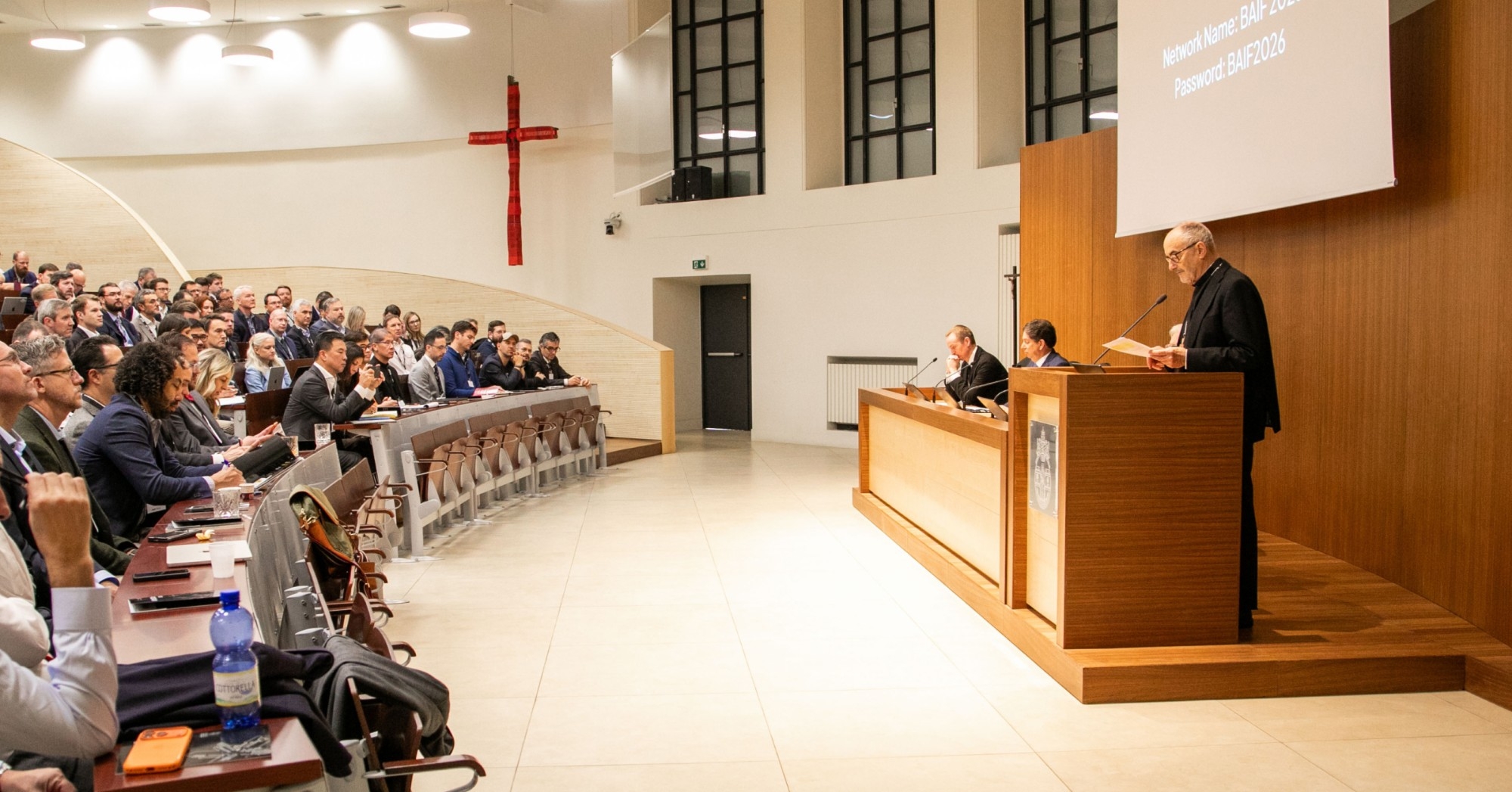
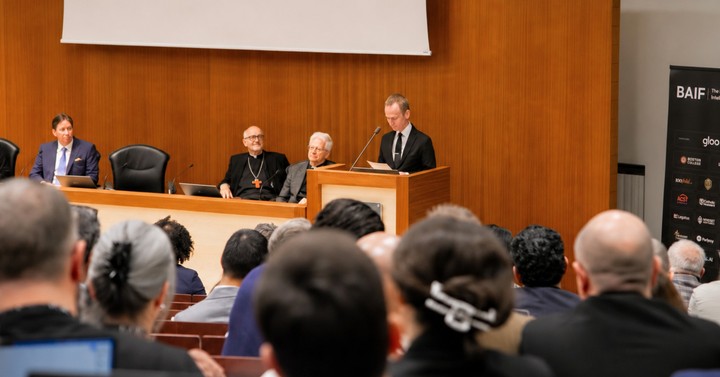
Opening address by Cardinal Michael Czerny, S.J., President of the Vatican Commission on Artificial Intelligence. Builders AI Forum, Pontifical Gregorian University, Rome, 5 November 2026.
The biblical frame of Magnifica Humanitas is particularly suited to this third session of the Builders AI Forum. It identifies two construction sites, in Babel and Jerusalem. Both are collective efforts, yet the manner of constructing and the outcome are very different in the two sites.
At Babel, the settlers concur: "Come, let us build ourselves a city and a tower with its top in the heavens." The undertaking involves a shared plan, organized and coordinated work, remarkable technical skill and coordination. Even a self-referential project like the Tower of Babel can mobilize many people, distribute tasks, and yield impressive results. By itself, however, collaboration does not guarantee the positive value of an undertaking.
For, with their tower, the people of Babel seek to confirm that they have total control of their own destiny. They will secure their future through the great structure they have built. The edifice ultimately becomes a monument to their self-sufficiency. St. Augustine identifies this as the great illusion of the Earthly City, whose libido dominandi – lust for domination – deludes it into believing it has no need for God. If the will to dominate motivates the common enterprise, it ultimately leads to dispersion, as the confusion of languages shows.
Contrast this with the second construction site. After defeat and exile in Babylon, the people of God return to rebuild Jerusalem. This reconstruction springs from the prophet’s prayer, their memory of the Covenant and trust in God’s promise. No one can rebuild the city alone. Each family is responsible for its section of the wall; everyone’s contribution proves indispensable as a part of the greater design. Augustine helps us to understand that building the order of love in the Heavenly City begins in each person’s heart: in the affections, desires, and love that each individual responsibly cultivates within themselves.
The difference between Babel and Jerusalem lies in the desire that guides the act of building. Augustine contrasts two cities – the City of God and the city of man – emerging from two different loves: in the former, "love of God to the point of indifference toward self"; in the latter, "love of self to the point of indifference toward God."
The contrast between the two cities presents us with today’s primary question: out of what desire shall we build, deploy and employ artificial intelligence?
We must ask deeply, “What kind of world, what kind of civilization, do these tools help to build?” Initiatives and projects can multiply while leaving many people behind. Efficient and indeed impressive systems can be out of touch with the real questions arising from real communities. Conference calls and meetings can multiply while genuine encounters become increasingly difficult.
This brings us to the Commission that I am honoured to lead and in whose name I thank you for all you do. When the Vatican’s Interdicasterial Commission on Artificial Intelligence was established on 12 May 2026, its mandate was
to facilitate collaboration and the exchange of information amongst the members regarding activities and projects relating to Artificial Intelligence, including policies on its use within the Holy See, whilst promoting dialogue, communion and participation.
But on 25 May 2026, before the Commission even held its first meeting, Magnifica Humanitas was promulgated. No one foresaw the interest which the Encyclical would immediately elicit, much less the broad impact it would have and the great expectations it would generate.
So now the Commission finds itself with a wider mission. That mission is to help the Church to exercise its moral leadership by carrying forward the implementation of Magnifica Humanitas, bringing its core teaching—what it means to be human—to bear on how AI is built, governed and used. Combining our mandate and mission, we seek to help the Holy See, with all the component Entities, Institutions and governance structures of the Vatican, to participate meaningfully in this urgent effort, to use AI responsibly, and to coordinate our initiatives and our voices. This has been parsed into four key thrusts:
- monitoring the rapid developments in the AI field, meeting with representatives of the AI world, and keeping the Holy Father, Roman Curia and Governorate informed of relevant information and emerging issues
- developing guidelines for the use of AI within the Roman Curia, the Governorate and related Vatican entities
- suggesting how the Holy See can carry forward the magisterium/teaching and implementation of Magnifica Humanitas as well as exercise its unique leadership
- encouraging Bishops’ Conferences everywhere to establish an AI task-force or working group, and encouraging all Dioceses to
- engage with the AI world in their area in the spirit of Magnifica Humanitas
- provide guidelines for the use of AI in Church administration and ministries
- accompany the faithful and others facing AI in daily life, at work, in education, in communications and in faith life.
The launch of Magnifica Humanitas on 25 May 2026 provides a vivid portrait of dialogue with the AI world, of which this Forum is a part. To Pope Leo’s right was Professor Leocadie Lushombo from the Democratic Republic of the Congo, representing that huge portion of the world which helps make AI possible but has no say in it; its role is limited to that of observer and, at best, consumer. To quote Professor Lushombo: “Magnifica Humanitas calls on the global South not to lose the human values of their diverse cultures to AI. AI can lead people to treat learning as an isolated, transactional process rather than a communal, dialogical one. There is, therefore, a danger that those cultures that understand learning as a matter of relationship, community, and dialogue will be eroded” (Leo Lushombo, 25.5.2026).
On Pope Leo’s left, Chris Olah, one of the founders of Anthropic and an expert in interpretability, sought and committed to wider dialogue beyond technicians and owners, engineering and commerce: “If we want this technology to go well, it is enormously important that there be people outside those incentives - people who care about things going well, who are paying close attention, who are willing to say hard things, who are willing to be our earnest, thoughtful, critics. It is through dialogue and mutual effort, through the push and pull, that humanity will achieve great things” (Chris Olah, 25.5.2026)
The final remarks were by Pope Leo. To Professor Lushombo he declared: “I have heard the silence of those who have no voice when decisions are made—decisions likely to generate new forms of exclusion and suffering.” Then, having summarized key dimensions of the Encyclical, he added: “Only with such an integral vision can artificial intelligence be directed toward the common good. Only together — those who design systems and those affected by them, richer countries and poorer ones, institutions and individuals, power centres and peripheries — will we be able to build a future, not for a privileged few, but for the entire human family.”
Thank you for attending this Forum in such numbers and facing such a generous programme of workshops. May God’s grace and the hopes of humanity inspire your deliberations. It has been less than six months since the launch of Magnifica Humanitas, when Pope Leo spoke for the Church in accepting the invitation, articulated by Chris Olah, “to walk together, to listen and to speak and together to find the way for humanity, in this time of artificial intelligence.” Foreshadowing the proceedings that are about to begin, he declared: “This interchange clearly bespeaks the gravity of the moment, as well as confidence that, together, we can discern the major questions of our time, and so, the future of humanity” (Pope Leo XIV, 25.5.2026).
Come, let’s build together.